Orange flowers on long stems are visible right now all over Riverdale.
They are the wild type daylily (original plants from which others were hybridized) and are exceedingly hardy. This quality is a plus and a minus. With enough light and some water they will cover difficult pieces of land with vegetation and June flowers but beware, should you want to get rid of them in favor of other plants.
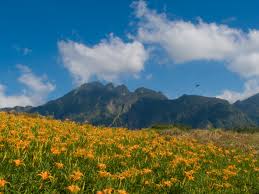
Field of Daylilies- Courtesy of manginwu
I have been playing for years with hybridizing my own daylilies with some nice results although nothing particularly spectacular.
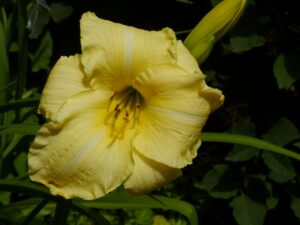
Hybridized Daylily from my Garden-S Jeselsohn
Know Your Plants Capability before Planting
Years ago, however, I had made the mistake of planting some orange wild types and then as they reproduced and spread every growing season I tried to remove them from tamer flower beds. Most of my efforts were in vain since they reproduce by runners and it is hard to get out the entire root system. Therefore, this year I came up with a different plan. Instead of hoping that I would dig up the plants at the end of the growing season, I simply cut them all down to the ground. Mind you, this will not kill them right away but it should slow them down. In the end I cut down about 90 plants with their flower stalks.
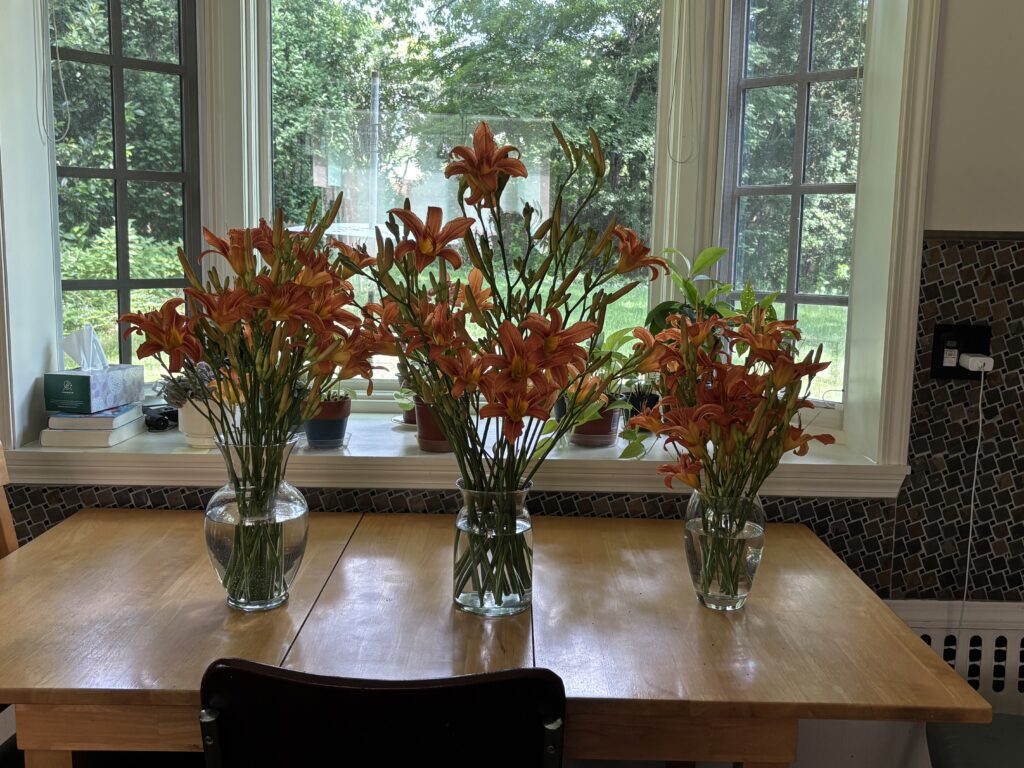
First I threw everything into my recycling and them I thought, “Why not enjoy them indoors.” So I took the stalks, divided them into three bunches and put them into vases.
House Beautiful
Vases filled with wild-type daylilies-S. Jeselsohn
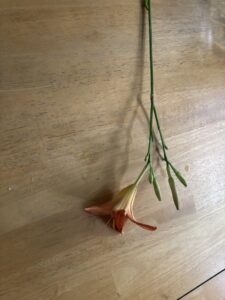
They are not called daylilies for nothing. Each flower bud blooms only for a single day which is why the scientific genus name is Hemerocallis. The Greek hemera means “day” and kallos means “beauty” and so together the name means “Beautiful for only one day”. However, each stalk has multiple buds and so come evening that day’s bud closes while the next morning another bud has matured and opens. That is not to say that each flower has an open bud on each succeeding day, but in a vase, the net effect is delightful.
Dayliliy Stem with Multiple Buds-S. Jeselsohn
The orange color is recognized by the species name fulva meaning a tawny or orange color. The scientific name therefore is Hemerocallis fulva. I have noticed that in the cut stalks, the blooming flowers are becoming increasingly pastel. I am guessing that this is the result of severing the stalk from the nutrient-supplying leaves and roots.
I hope that I have finally brought my Hemerocallis fulva under control. I will know more as the season progresses.