I have previously mentioned my monthly subscription to Ivrit Magazine, published by the Jerusalem Post. The initial purpose for subscribing was to improve my spoken Hebrew by increasing my vocabulary necessary for day-to-day conversations. While I had an excellent education in Jewish Day Schools, I was more conversant with Biblical Hebrew, as opposed to the modern Hebrew that is spoken in Israel today.
Reading Ivrit Magazine- Courtesy A. Jeselsohn
While there has been some improvement in my Hebrew language skills, I was pleased to discover that many of the articles are also highly interesting. Some have to do with archeology, some with scientific breakthroughs, and some with cultural offerings. One day, to my delight, there was an article about the three plant nurseries established by the Keren Kayemet L’Yisrael (KKL), otherwise known as the Jewish National Fund (JNF).
Keren Kayemet L’Yisrael – Jewish National Fund
Founded in 1901 by the Fifth Zionist Congress held in Basel, Switzerland, the purpose of the KKL-JNF was to purchase land for the Jewish People. At that time, these lands were ruled by the Ottoman Empire. In addition to acquiring land for national institutions such as the Bezalel Academy for Art and Design, as well as the Technion Institute of Technology and kibbutzim, the KKL devoted itself to resurrecting the severely damaged ecology of the land.
Eshtaol Nursery
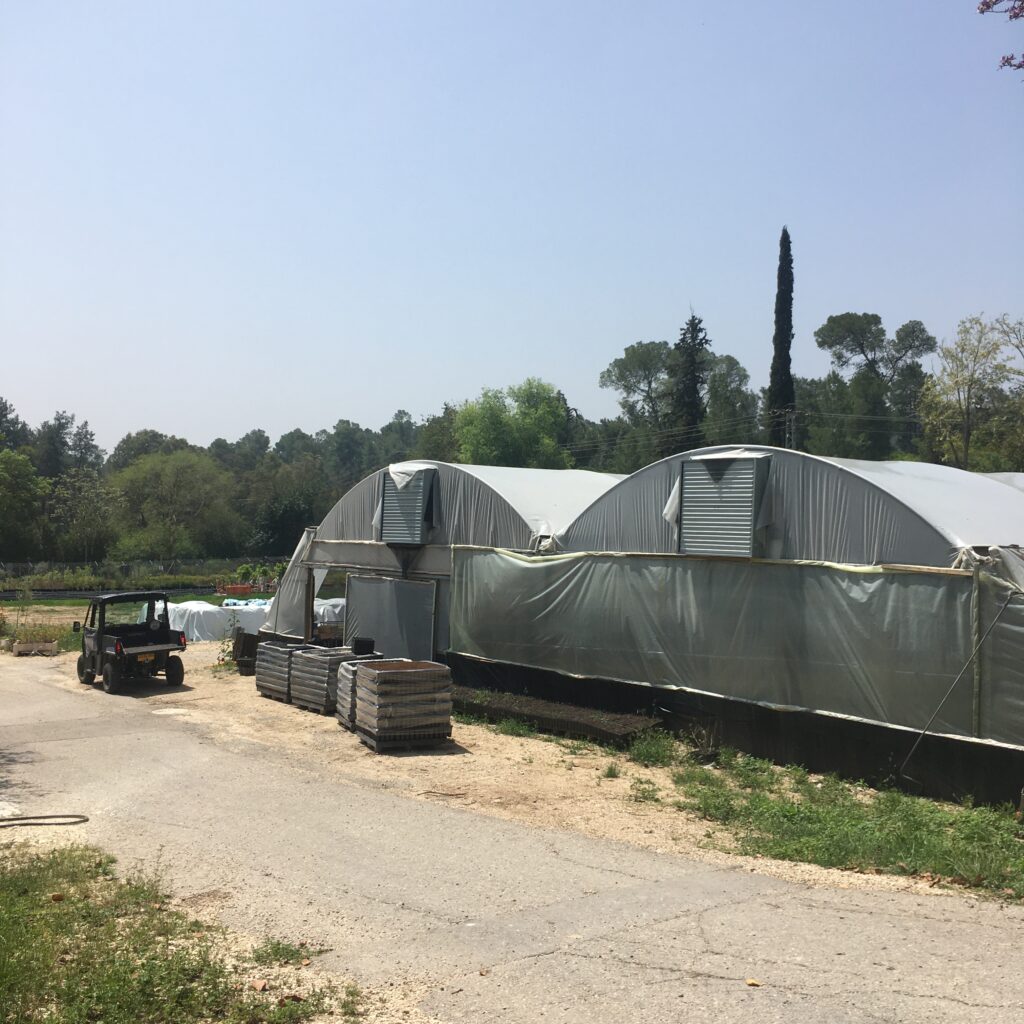
Greenhouse at Eshtaol- S. Jeselsohn
The article of interest mentioned that KKL-JNF has three nurseries spaced around the country –the Golani Nursery west of Tiberias, the Eshtaol Nursery close to Jerusalem, and the Gilat Nursery in the western Negev. Since we were planning a trip to visit Israel, I could not resist the opportunity of visiting one of the nurseries and, forthwith, contacted KKL-JNF. After explaining my interest, I was invited to visit the Eshtaol Nursery.
Spring in Israel usually arrives earlier than in the New York area. This year, however, the seasonal rains continued into March/April and the temperatures were quite chilly. Nonetheless, the day of our appointment arrived delightfully sunny and pleasantly warm. Despite having driven many times in the general area of Beit Shemesh, we had no idea that there was an extensive governmental nursery there. Parenthetically, Eshtaol is in the area in which the Biblical story of Shimshon (Samson) takes place.
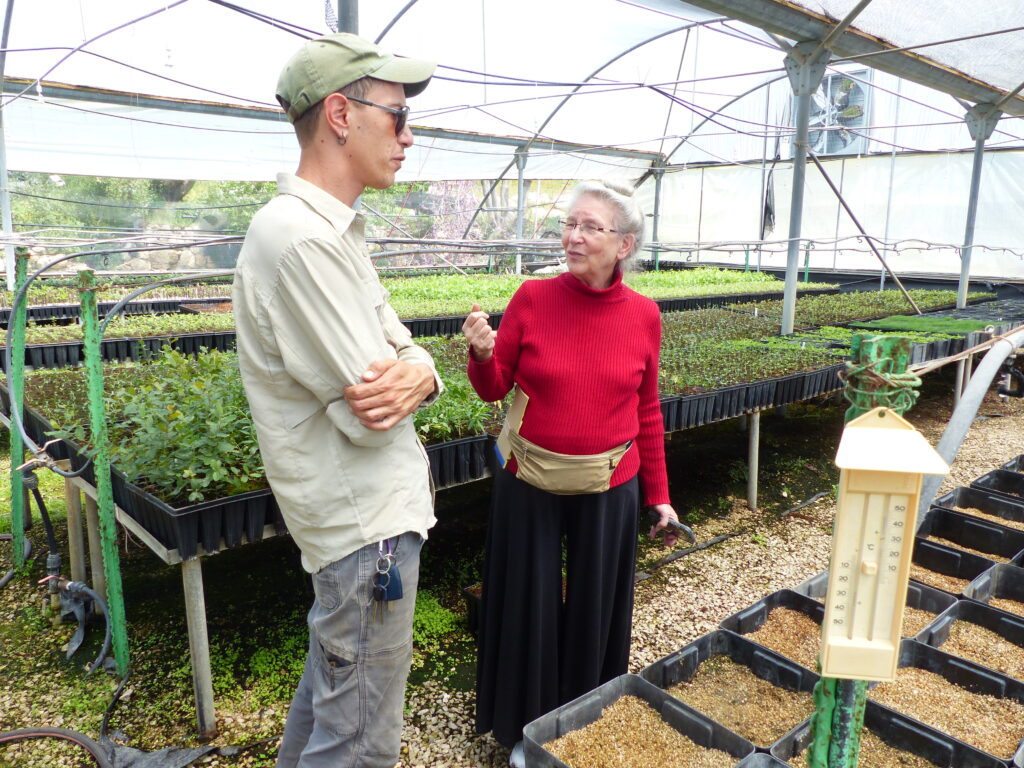
We pulled into the parking area and were met by the manager, Rotem Atias, 32. If ever some was preordained for his occupation, Rotem certainly was. In Israel, many children have names based on native plants or animals. Some names simply reference agricultural terms as testimonial to the reclamation of the land which had been terribly neglected over many centuries.
Rotem Speaking with blogger - A. Jeselsohn
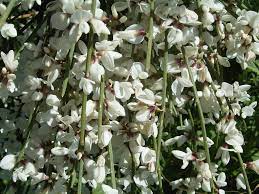
Rotem raetam - Courtesy Frank Vincentz
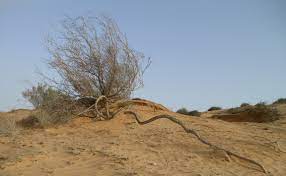
A rotem is a shrubby tree, Retama raetam, growing on sandy or degraded soil.
Rotem Growing on Sandy Soil - Vincent Felde
Tu Bishvat – Jewish New Year for Trees
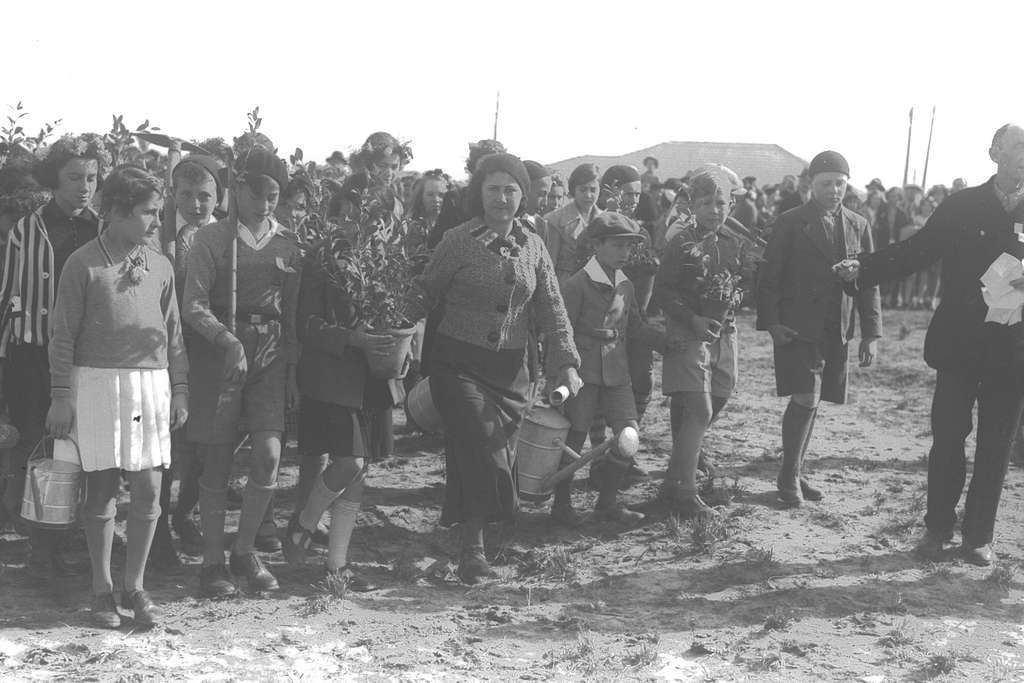
In addition, our Rotem was born on Tu Bishvat, sometimes called the Jewish Arbor Day or New Year for Trees. Taking place on the fifteenth day (tu is a convention in Hebrew for the number fifteen) of the month of Shvat – the Hebrew month roughly correlated with March – it was considered the “birthday” of all trees planted since the Tu Bishvat of the preceding year. This has theological underpinnings from the Biblical Period. A tree planted in, say September would be considered one-year old on the next Tu Bishvat, regardless of the fact that in actual planted time it is only six months old.
School Children Planting Trees on Tu Bishvat in 1934 - Israeli Press Office
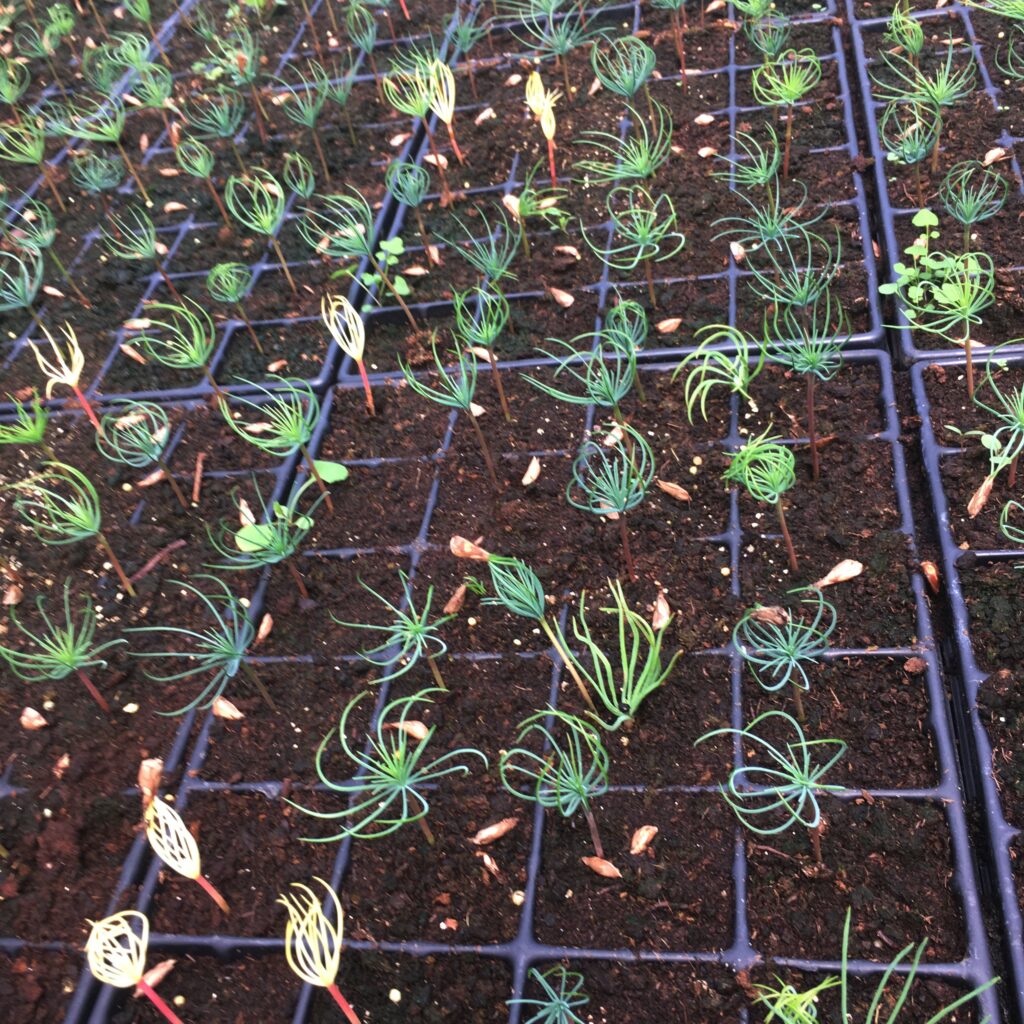
Germinating the Seedlings
Conifer Seedlings - S. Jeselsohn
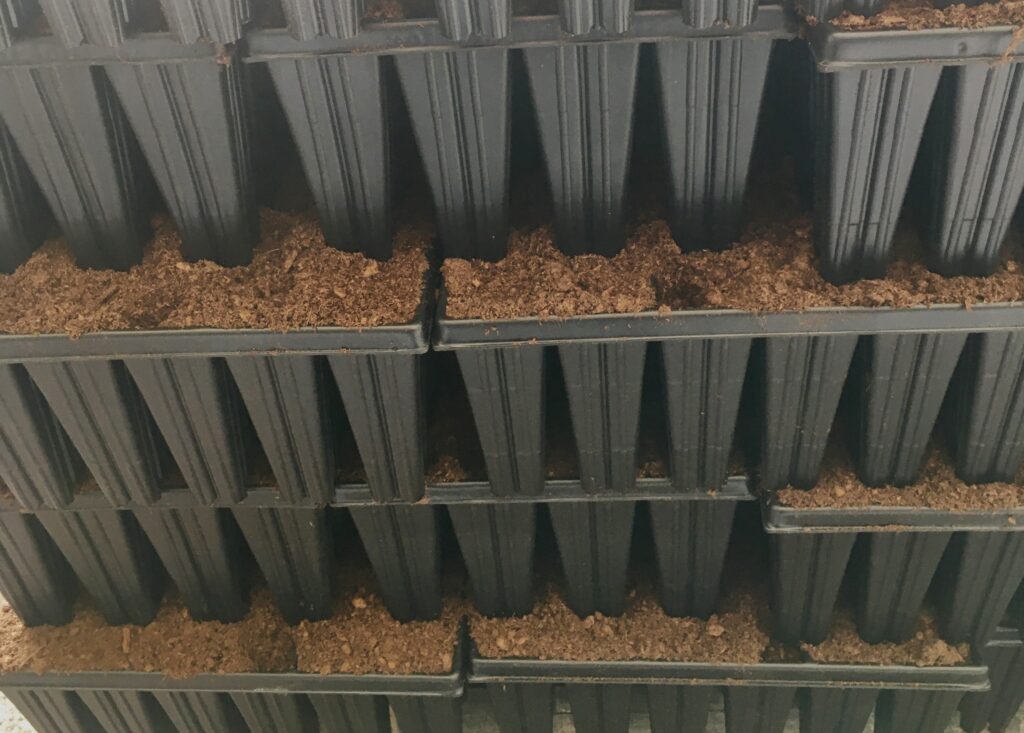
Although the nursery covers 5 acres, Rotem primarily walked us through the sections devoted to my areas of interest – the germination and growth of tree seedlings to a plantable size usually taking from six to ten months. The seeds are sourced by the KKL-JNF seed center in Beit Nechemia, a small moshav – a farmers’ cooperative community – near Ben Gurion airport. Germination takes place in a climate controlled room and the seedlings are then sown in small square pots
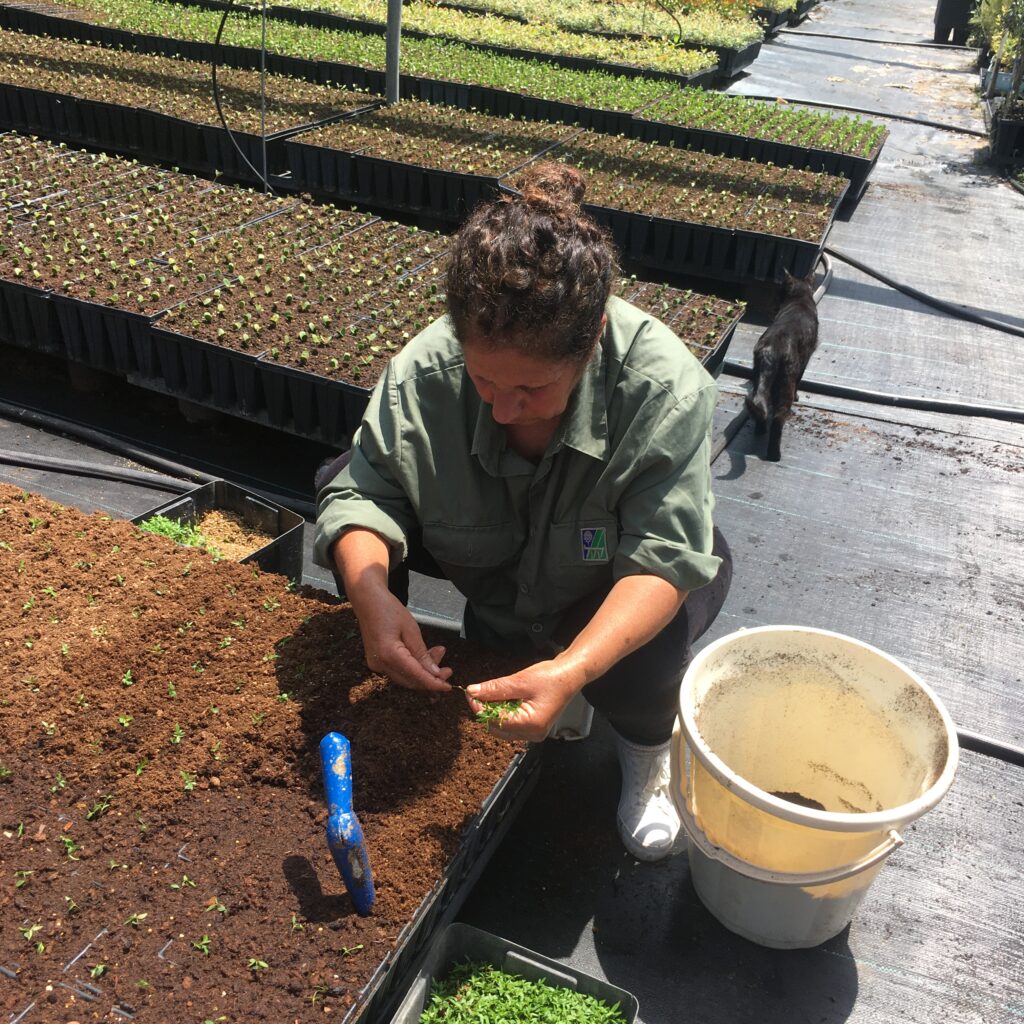
When they reach the right size depending on the species, Shula, who has been working for the nursery for many years, repots them into larger containers. Rotem estimates that Shula has probably repotted several million seedlings over the years.
Shula Potting Seedlings - S. Jeselsohn
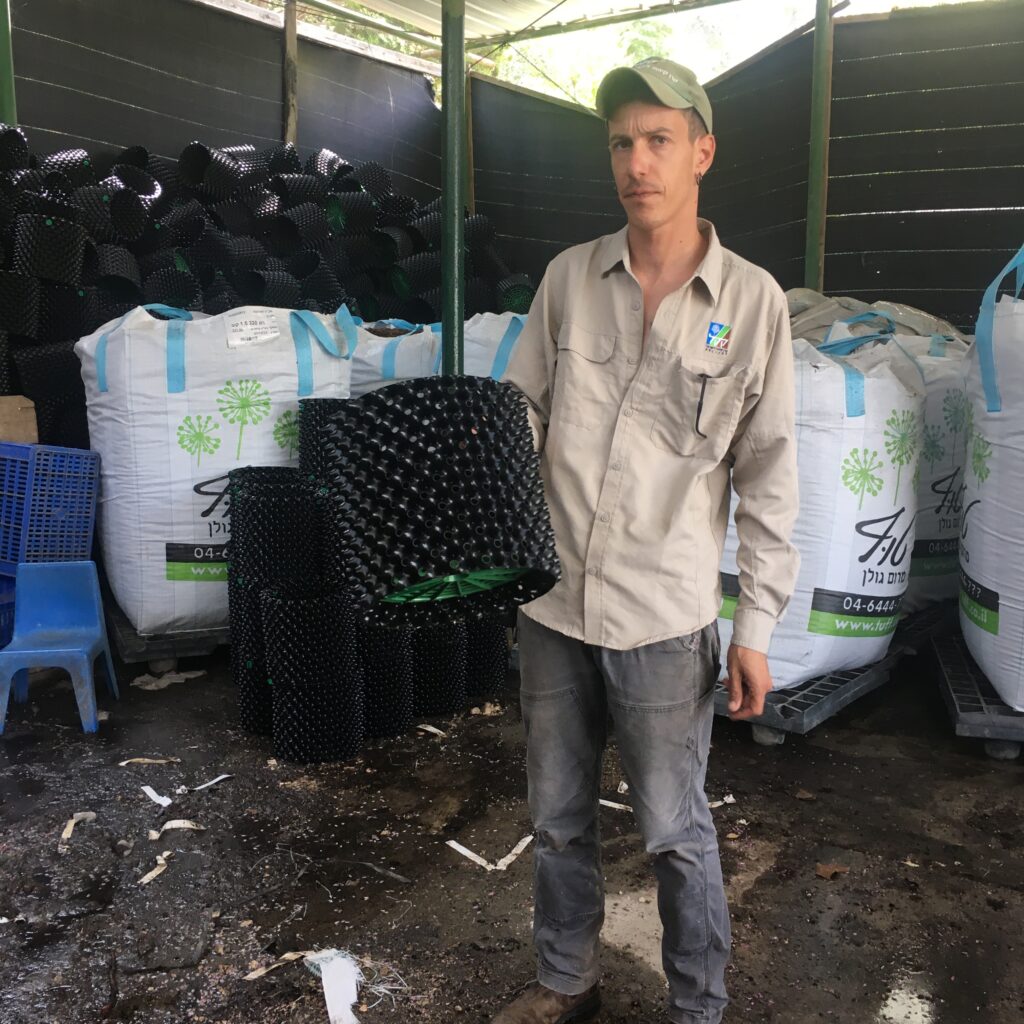
The nursery also has developed several specialized containers to encourage proper root growth.
Rotem Holding Specialized Container - S. Jeselsohn
Another type of specialized growing container - S. Jeselsohn
Tree Seedlings Grown at Eshtaol
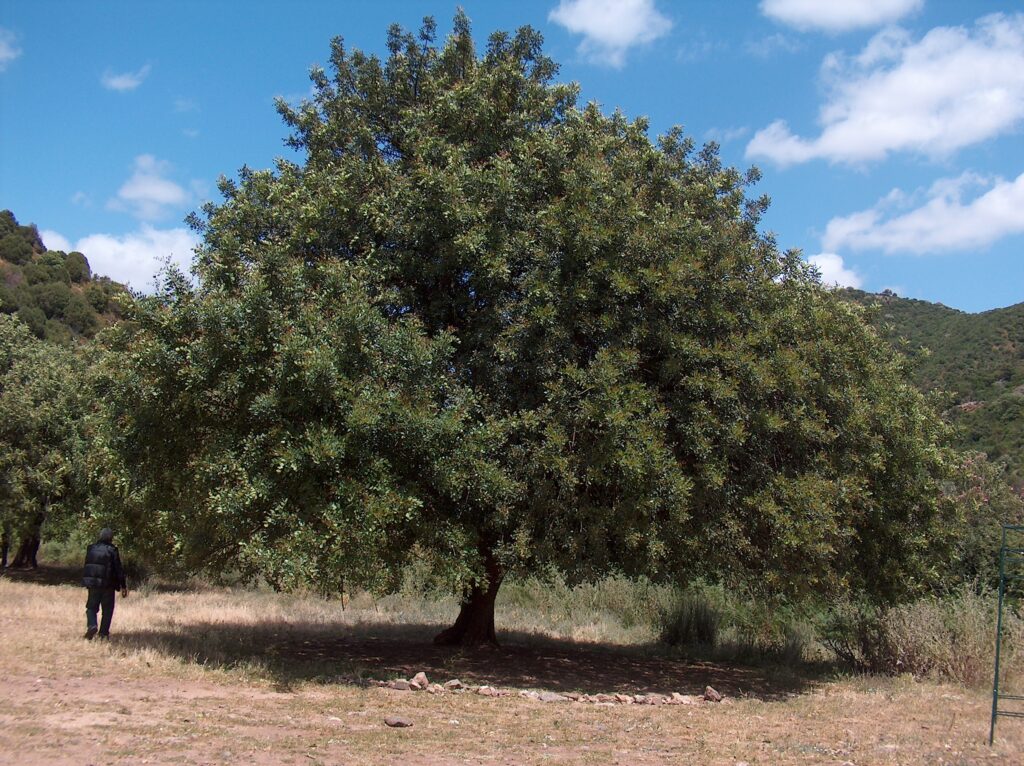
Four types of conifers are grown here, including the pine trees Pinus halepensis and Pinus canadensis. Broadleaf trees being grown include oaks (genus Quercus), carobs (genus Ceratonia) and they also grow three types of pistachio trees ( genus Pistacia); note that these species do not produce edible nuts.
Carob Tree - Courtesy Giancarlo Dessì
Pistacia palestina - Courtesy Eytan Firman
When the Eshtaol Nursery began growing seedlings, they were producing 1.5 million tree seedlings per year. Now, with the barren terrain of Israel largely reforested after seventy years of reclamation work, they only need to produce 300,000 seedlings per year. Of that number half is produced for various ongoing reforestation projects while the other half is given away to schools and institutions for public planting projects largely taking place on Tu Bishvat.
Planting Stressors
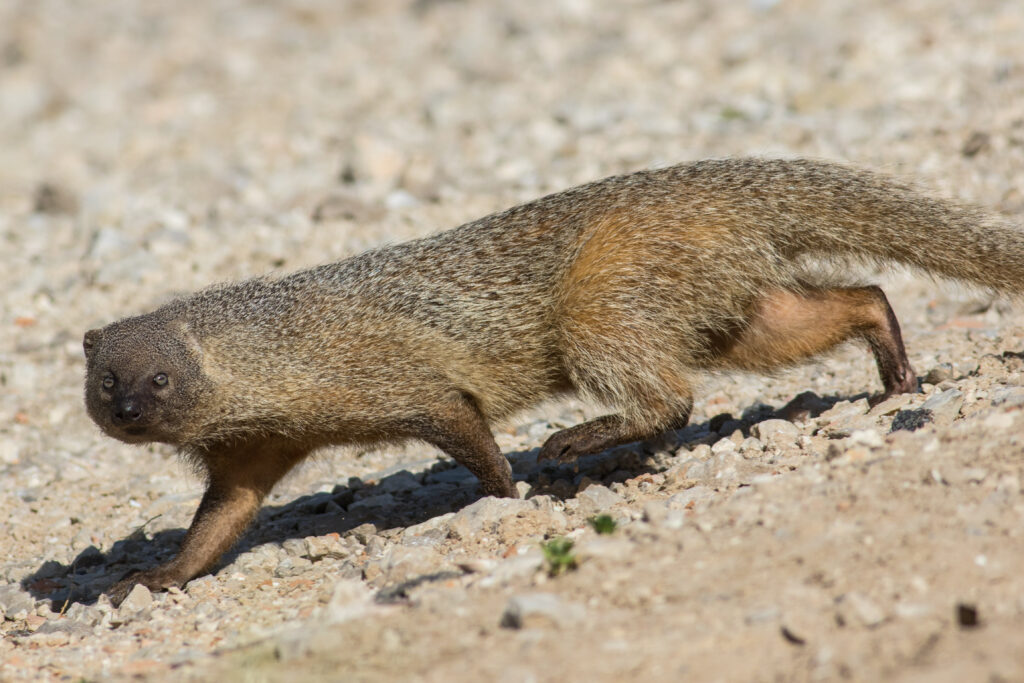
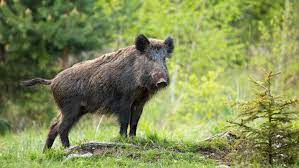
Trees in reforested areas are subject to two main stresses. The first is from wildlife that chew the delicate bark off tree trunks. These pests include wild boar, hedgehogs, jackals and mongooses.
Mongoose - Courtesy of Minozig
Wild Boar - Courtesy of JMrocek
The second stressor results from forest fires, some of which are caused by arson. The KKL no longer runs in to replant burnt forests immediately. The current thinking is to allow the forest the opportunity to regenerate over five years from the seedbank (mature seeds that have fallen to the ground and are buried in the soil). Conifers regenerate first and supply the necessary canopy layer for the understory broadleaf trees. This understory layer needs to be shielded by the conifers in order to grow and thrive.
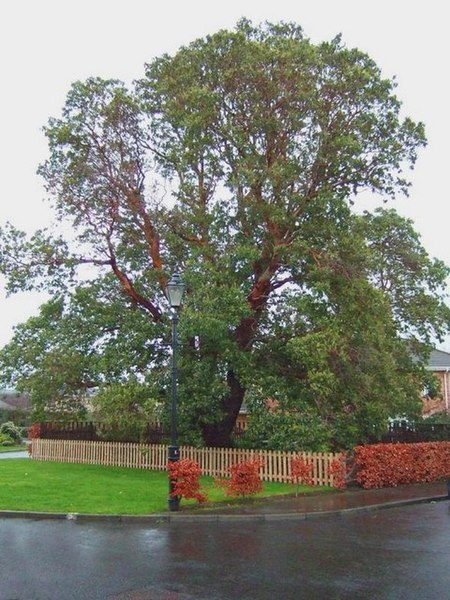
Therefore, as the conifers regrow from seed, some of the burnt understory trees whose roots are still alive – oaks, pistachios, and arbutus – can regrow from those roots.
Arbutus Tree- Courtesy of Simon Johnston
It was thrilling to see real-time activity designed to improve the natural condition! Israel blooms at the hands of those who love her!
If you have enjoyed this blog, you may enjoy my book, A Habit of Seeing: Journeys in Natural Science.


Very nice and informative. Excellent pictures. Check out The Biggest Little farm. Related ideas. Worth the price.
Thank you.
They’re still planting pine trees? https://natureisrael.org/wp-content/uploads/2023/01/Afforestation_Ecology_Damage_SPNI_2019.pdf